Hengistbury Head History - Overview
Hengistbury Head is seeped in the history of our nation. From the very depths of pre-history right up to the modern day, Hengistbury Head has played an important part in the nations trade, defence and communications.
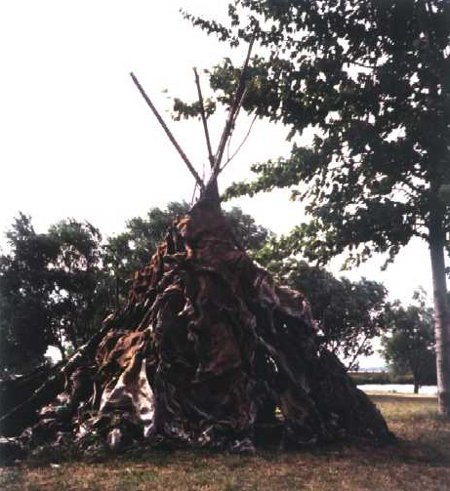
Paleolithic hunting tent simlar to those used on Hengistbury Head 5000 years ago (image Wikipedia)
Today, even after the catastrophic loss of headland caused by the mining activities in the 19th century, Hengistbury Head still returns significant and important archeological finds dating back thousands of years. The earliest history of Hengistbury Head shows it being used as a high ground vantage point by nomadic hunters, but as the local population became more settled, Hengistbury Head became a major Iron Age trading centre.
Long before the arrival of the Romans,Hengistbury Head was a thriving trading port. Some have commented that Hengistbury Head was probably the first urban settlement in England. It was without doubt one of the the most important sea ports in the the whole of England.
Even though it was heavily defended by the Double Dykes ramp and ditch defence, Hengistbury Head gave up without a fight during the Roman invasion of 43AD. But little changed with the arrival of the Romans. Hengistbury Head continued to flourish as a trading port for the next 400 years.
As time went on, Hengistbury Head was replaced by larger and more accessible ports, like nearby Poole. Hengistbury Head returned to being desolate uninhabited wasteland. Occasional useage was made of the site, usually as a look-out post during a national emergencies but other than that Hengistbury Head was allowed to slumber through several centuries.
Then in the 17th century great attempts were made to improve Christchurch Harbour and make the entrance to Christchurch more navigable.
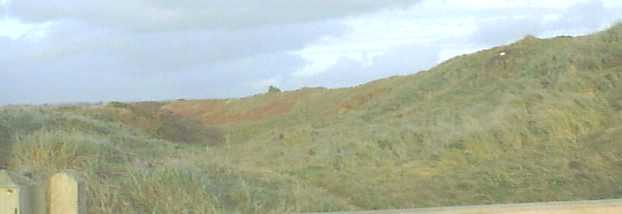
The Double Dykes. An impressive Ramp and Ditch defence at the base of Hengistbury Head
While these attempts ultimately failed, the remains of the Jetty can still be seen at low tide. The jetty, known as Clerendon Jetty or the Long Rocks, was built midway along Mudeford Sandspit, the sandspit at the base of Hengistbury Head.
The 18th century saw the area descend into lawlessness with smuggling endemic. This cumulated in the Battle of Mudeford of 1798 where a batttle between smugglers and coastguards took place near Mudeford Quay and resulted in the frigate Orestes firing its cannons onto Mudeford and Christchurch.
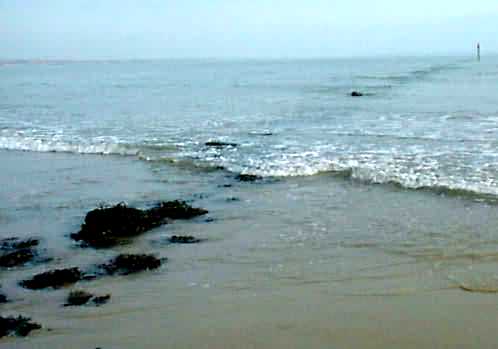
The Long Rocks, or Clarendon's Jetty, a brave attempt to improve the navigability of Christchurch Harbour
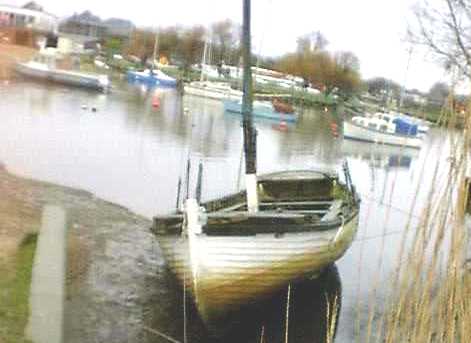
The last Mudeford Cutter, a true descendant of smugglers boats of the 18th century. This boat, locally built in early part 20th century was broken up in 2007
The nineteenth century saw Hengistbury Head become an open caste mine. The prize was the famous Hengistbury Head Ironstone boulders, know as Doggers. These heavy boulders are rich in iron-ore and lie in three layers though Hengistbury Head. These Ironstones were also stripped off the beach and dredged from off shore. This left Hengistbury Head exposed to the ravages of the sea. Massive amounts of erosion then took place with approximately half of Hengistbury Head being washed into the sea within 80 years.
The flat open space between Hengistbury Head and Southbourne became one of the country's first aerodromes in the early years of the 20th century. Sadly Charles Rolls (of Rolls-Royce) lost his life here in 1910 at an air display.

Ironstone Doggers on the beach. They were shipped out by their thousand in the 1840's, leaving the base of Hengistbury Head exposed to the sea.
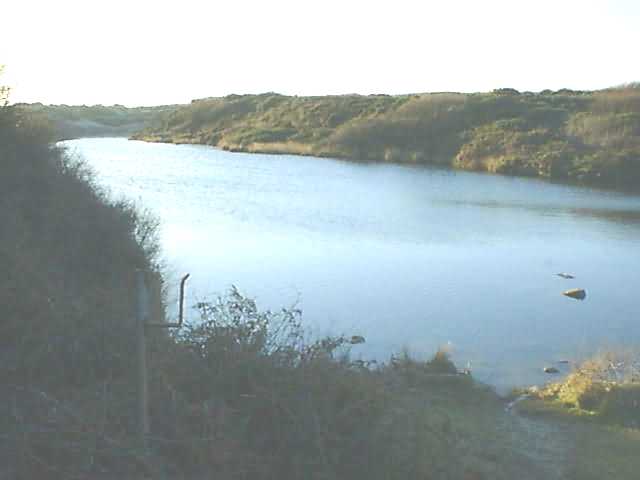
The top half of the 19th century quarry is now a lake
Later in the twentieth century great efforts were made to repair the damage caused in the 1840's by the Hengistbury Mining company. These efforts, including the building of the Long Groyne in 1938 have, (we hope) stabilised Hengistbury Head and at least extended its lifespan considerably.
Today the is an excellent visitors centre packed with exhibits and information to complement the magnificent location. Hengistbury Head remains a beautiful place with lots of history to enchant any visitor. Long may it remain so.